
4.7 avg.
5840+ reviews View all
5840+ reviews
Order by 16:00 for same day shipping
14 days return
DE
EN
Individual
Business

Filters
Price
to
Oscilloscopes
With an oscilloscope, you view electrical signals on a screen. You see how a voltage changes over time. This allows you to detect faults and check whether a circuit is working properly.
An oscilloscope is suitable for testing power supplies, sensors, microcontrollers, and other electronics. You can use it to measure voltage, frequency, pulses, and waveforms, among other things. Interference, noise, and short voltage spikes also become visible.
Looking to buy an oscilloscope? Pay particular attention to bandwidth, sample rate, memory depth, and the number of channels. For hobby use, education, and repairs, a two-channel digital oscilloscope is often sufficient. A bandwidth of 20 to 100 MHz is suitable for many general measurements.
For fast digital circuits, you need more bandwidth and a higher sample rate. Larger memory can also be useful. This allows you to record longer signals and detect minor disturbances.
View and compare our digital oscilloscopes. Choose the model that suits your projects, desired measurement range, and experience.
12 products found
Sort by:
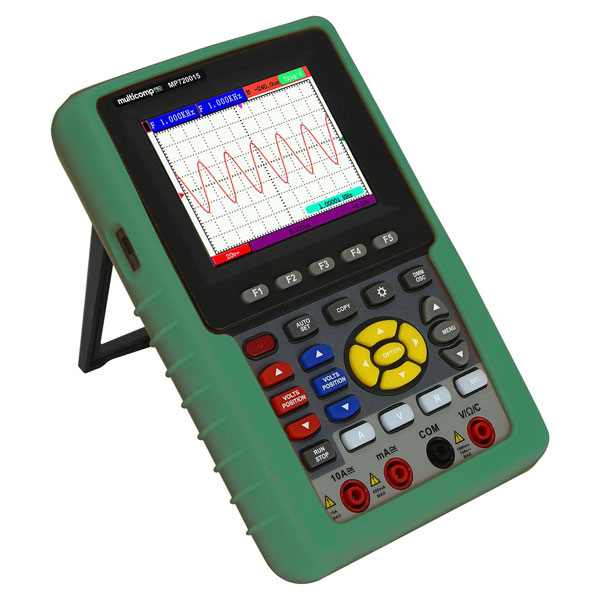
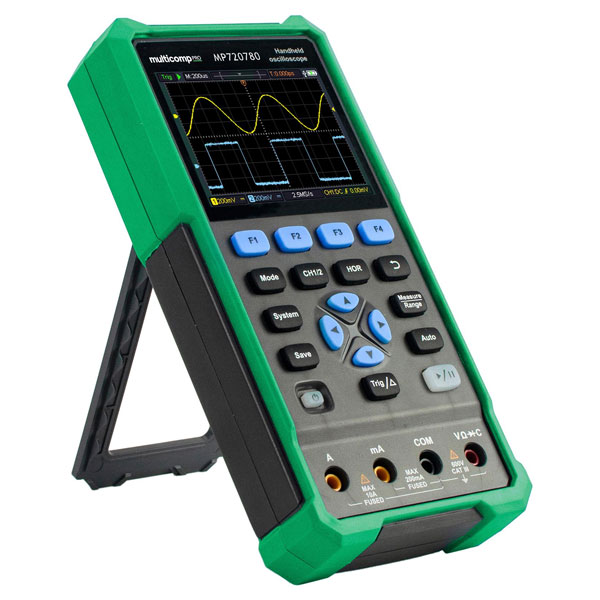
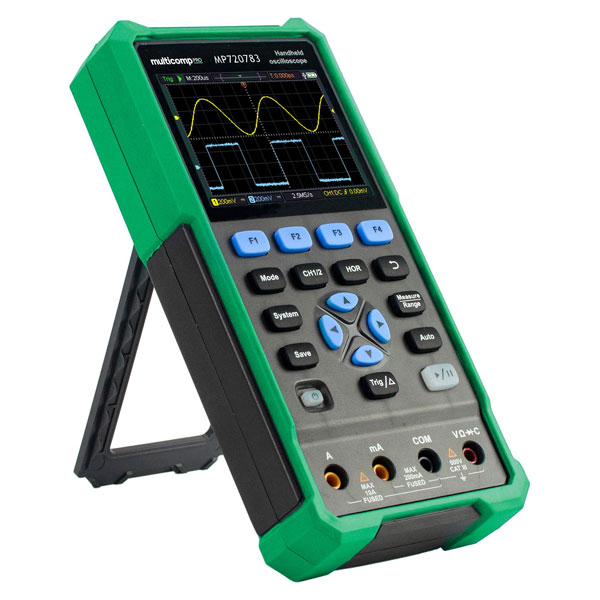
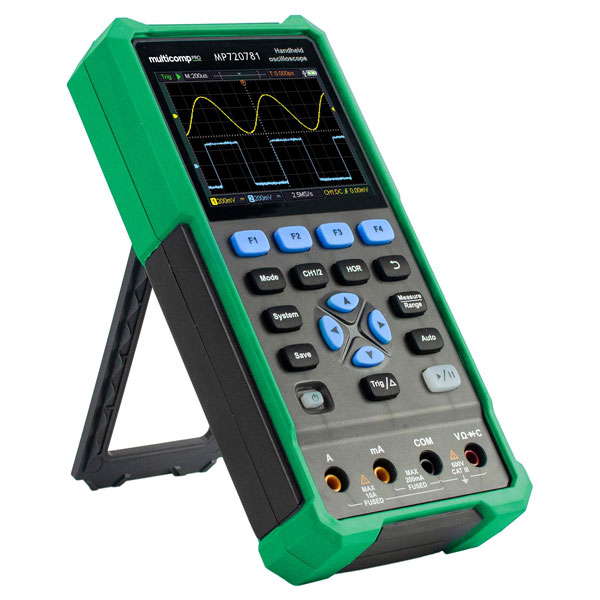
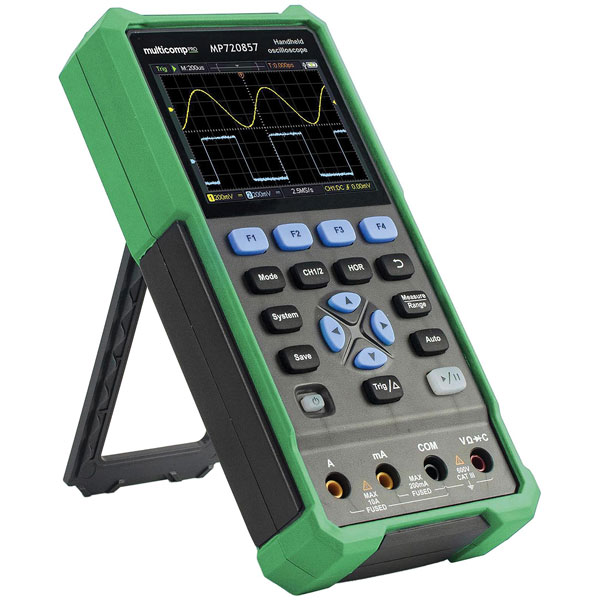
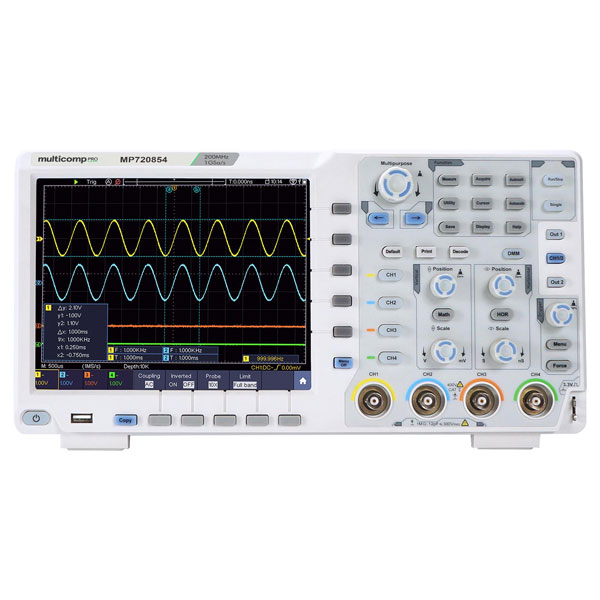
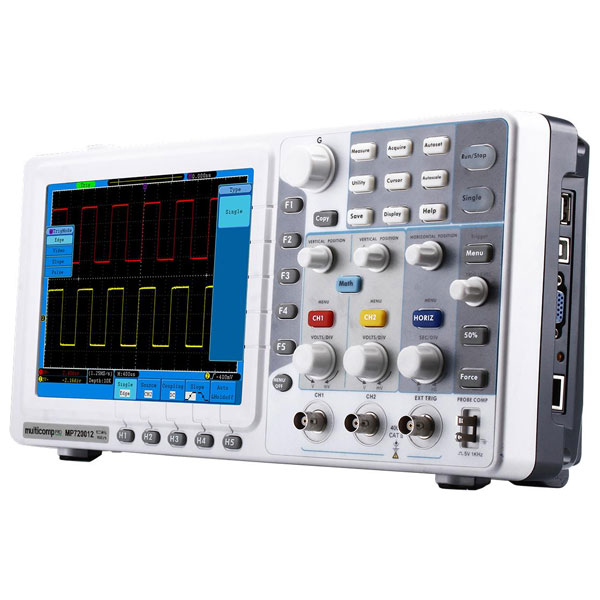
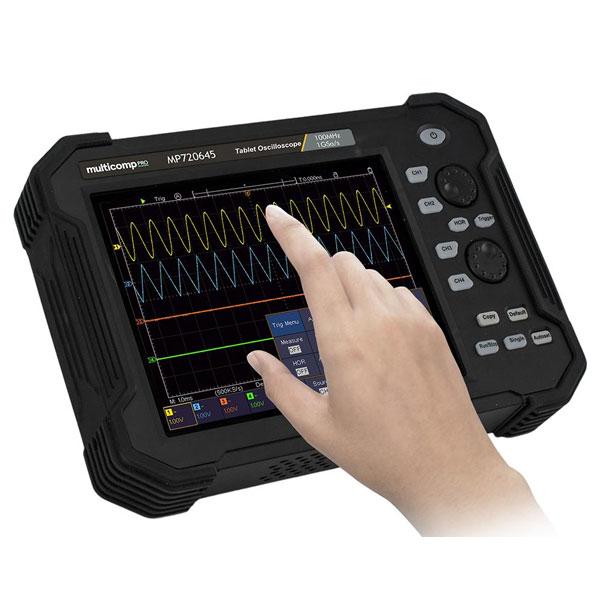
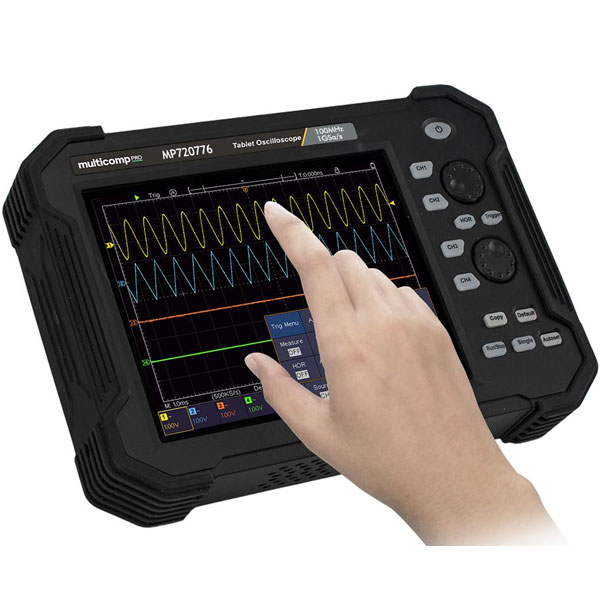
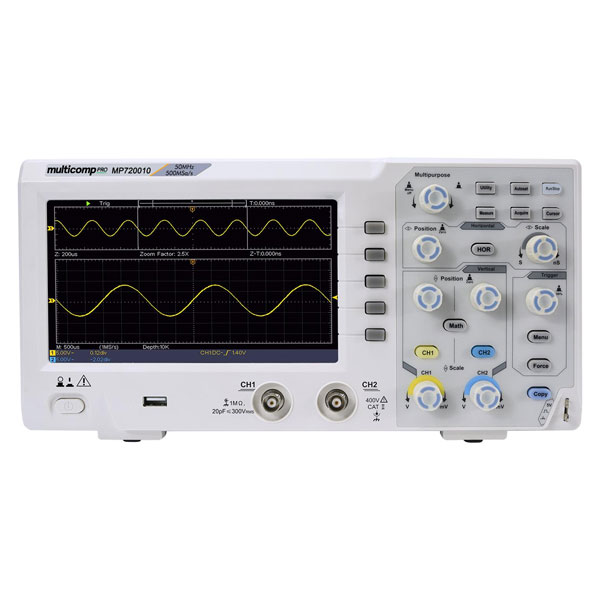
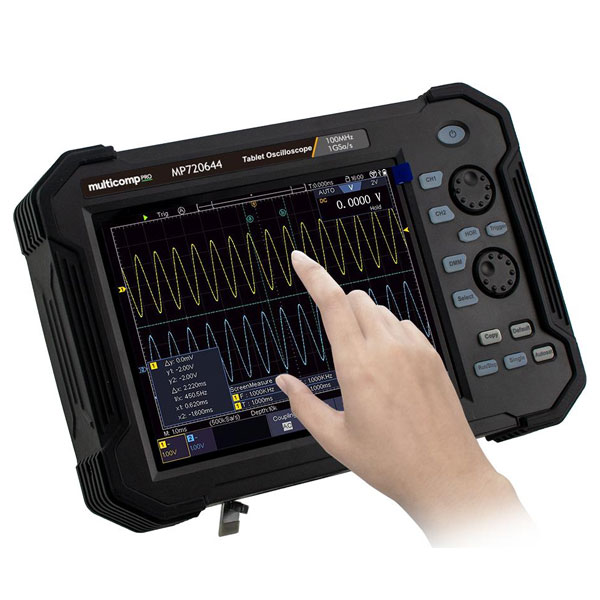
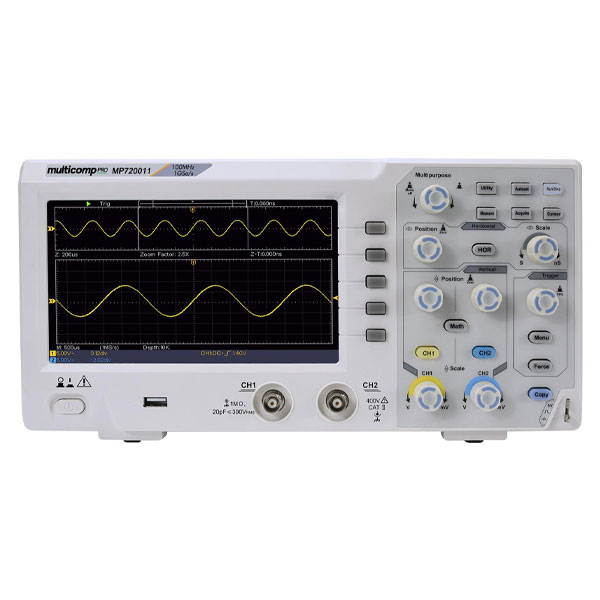
What is an oscilloscope?
An oscilloscope is a measuring instrument for electrical signals. The screen shows how a voltage changes. The voltage is usually on the vertical axis. Time is on the horizontal axis.
This allows you to see the shape of a signal. This can be a sine wave, square wave, or short pulse. Noise, interference, and voltage spikes also become visible.
A multimeter usually displays a single measurement value. An oscilloscope shows the entire waveform of a signal. As a result, you find errors that you would easily miss with a multimeter.
What do you use an oscilloscope for?
An oscilloscope is widely used for testing and repairing electronics. Both hobbyists and professional technicians work with it.
You can use an oscilloscope for, among other things:
- Observing electrical signals
- Measuring voltage and frequency
- Testing power supplies
- Checking sensors
- Measuring PWM signals
- Investigating Arduino and Raspberry Pi projects
- Comparing two signals
- Finding noise and voltage spikes
- Troubleshooting circuits
With multiple channels, you can view two or more signals simultaneously. This allows you to compare, for example, the signal before and after a component. You can also place a clock signal next to a data signal.
What bandwidth do you need?
The bandwidth determines which signals the oscilloscope can measure accurately. This value is indicated in megahertz, abbreviated as MHz.
A 20 MHz oscilloscope is suitable for simple and slower signals. Think of audio engineering, education, and many hobby projects. For faster electronics, a 50 or 100 MHz model is often a better choice.
Always choose slightly more bandwidth than you think you immediately need. An oscilloscope measures less accurately when the signal approaches the maximum bandwidth.
Are you measuring a 10 MHz signal? Then an oscilloscope with only 10 MHz bandwidth is not a good choice. It is better to choose a model with significantly more bandwidth.
Digital signals often require extra attention. A square wave contains more than just the fundamental frequency. The fast edges require a higher bandwidth. Therefore, do not look solely at the clock frequency of a circuit.
What does sample rate mean?
The sample rate indicates how often the oscilloscope measures the signal. This value is usually expressed in MS/s or GS/s.
A sample rate of 1 GS/s means one billion measurements per second. A higher sample rate provides more information about the signal. As a result, rapid changes become more visible.
Is the sample rate too low? Then the oscilloscope may miss parts of the signal. The image may then deviate from the actual signal.
Please note that the maximum sample rate sometimes only applies when using one channel. When using two channels, the speed may be lower. Check this in the product specifications.
How many channels do you need?
Most simple digital oscilloscopes have two channels. For many hobby projects, repairs, and lessons, that is sufficient.
With two channels, you can measure two signals simultaneously. For example, you can compare an input and an output. You can also see if two signals start at the right time.
A four-channel oscilloscope offers more possibilities. You can then monitor multiple components of a circuit simultaneously. This is useful for more complex electronics and digital systems.
More channels often make an oscilloscope more expensive. Therefore, determine in advance how many signals you want to measure simultaneously.
What is memory depth?
A digital oscilloscope stores measurement points in internal memory. The memory depth determines how many measurement points the device can store.
A larger memory allows for longer recording. You can then zoom in on a small part of the signal. This helps in finding a short disturbance.
For simple and fixed signals, a small memory is often sufficient. Do you want to investigate long or varying signals? Then a greater memory depth is better.
So don't just focus on bandwidth and sample rate. Memory also influences what you can see during a measurement.
What does the trigger function do?
A trigger determines when the oscilloscope starts measuring. Without a proper trigger, the signal can move erratically across the screen.
You set a specific voltage level with a simple trigger. The oscilloscope starts as soon as the signal reaches this level. This ensures that the waveform remains stable on the screen.
Advanced oscilloscopes offer more trigger options. For example, they can respond to a short pulse or an anomalous waveform. This makes it easier to find disturbances that do not occur repeatedly.
Pay attention to the oscilloscope probe
The probe is the measuring lead between the oscilloscope and the circuit. The quality and settings of the probe affect the measurement.
Many probes have a 1× and 10× setting. The 10× setting loads the circuit less. This setting is often better for higher frequencies.
Always set the oscilloscope and probe to the same value. Also check that the probe is properly adjusted. Many oscilloscopes have a special test signal for this.
Never simply use a standard probe for mains voltage measurements. A special differential probe may be required for this. Always check the maximum voltage and safety rating of the probe.
Which digital oscilloscope suits you?
For hobby use and education, a simple two-channel model is often a good choice. Clear controls and automatic measurement functions are important in this regard.
Do you mainly perform repairs? Then choose a model with sufficient bandwidth and good memory. This will also detect brief interruptions and anomalous signals.
Higher bandwidth and sample rate are required for fast digital circuits. Additional channels and trigger functions can make the research easier.
Therefore, first determine what you want to measure. Then look at the bandwidth, sample rate, memory depth, and the number of channels. This way, you will find an oscilloscope that suits your application and budget.